
Global Insight
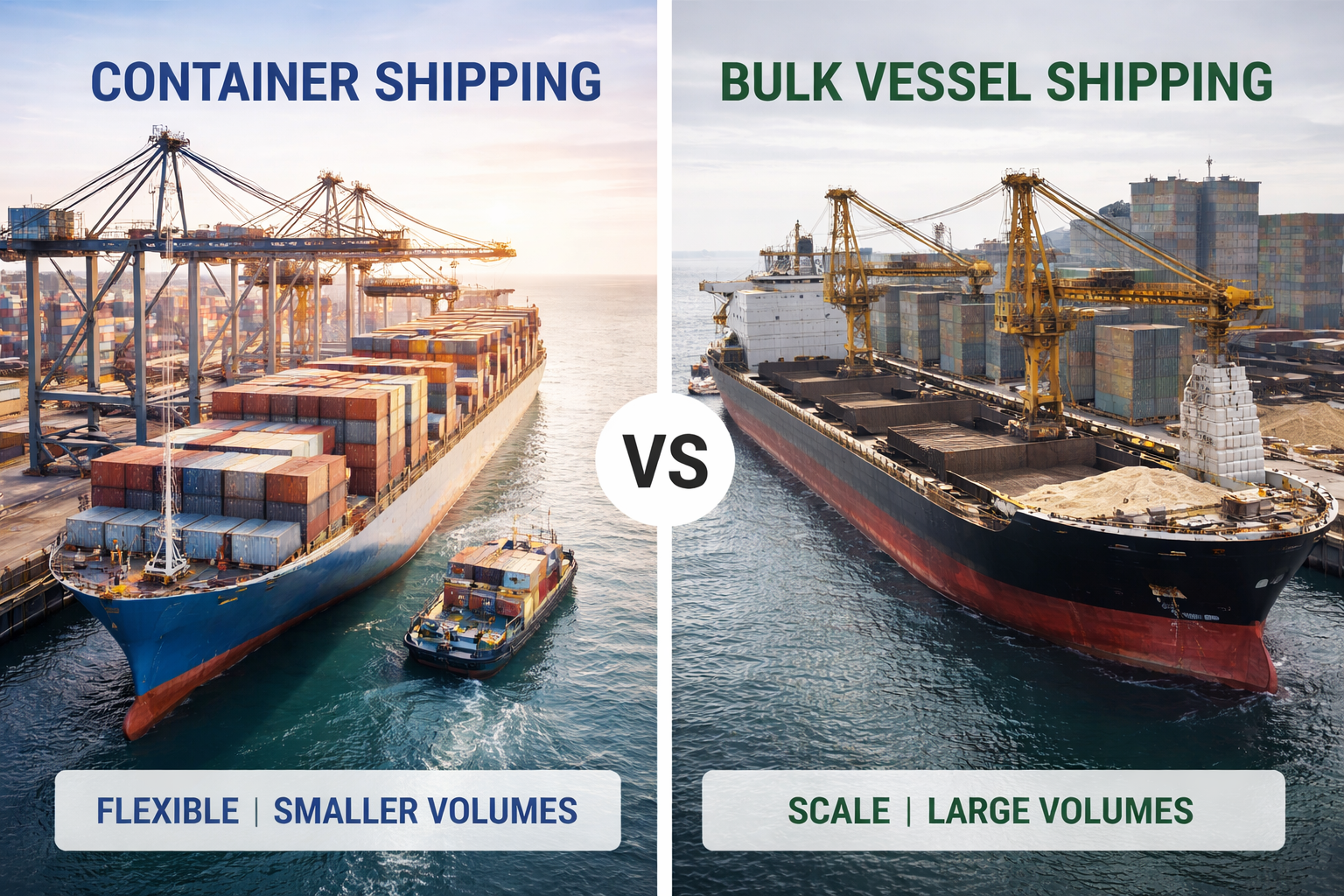
Container prices are higher — and there’s a reason for it.
Container vs bulk sugar shipping is one of the most misunderstood topics in commodity trade.
A common question in the market is simple:
“Why are container prices higher than bulk vessel shipments?”
The short answer is not market manipulation, not inefficiency, and not hidden margins.
It is structure.
When discussing container vs bulk sugar shipping, you are not comparing the same logistics model.
Bulk vessels are built for scale. They only become efficient when volumes are large, ports are equipped with proper discharge systems, and schedules are fixed well in advance. When everything aligns — tonnage, berth availability, handling equipment, and timing — the cost per metric ton drops significantly.
But that efficiency depends on scale.
Bulk shipping works best for refinery contracts, national supply programs, and buyers who move tens of thousands of metric tons at once. It requires coordination, infrastructure, and commitment.
Container shipping is different.
In the container vs bulk sugar shipping comparison, containers are designed for flexibility. They allow smaller shipment sizes. They move faster. They can reach secondary ports where bulk vessels cannot dock. They simplify discharge in markets without heavy port equipment.
That flexibility adds operational layers — container booking, stuffing, demurrage risk, repositioning costs, and longer handling chains.
And every layer has a cost.
So when container prices look “expensive” compared to bulk vessel rates, it is not inefficiency. It reflects a different logistics architecture. Buyers are not paying more for the same product — they are paying for adaptability, access, and reduced volume commitment.
In container vs bulk sugar shipping, price follows structure.
A refinery buying 50,000 MT under long-term allocation will never have the same freight economics as a buyer moving 500–1,000 MT into a secondary port.
Shipment size influences vessel type.
Vessel type influences freight cost.
Freight cost influences final price.
Operational risk also differs. Bulk cargo concentrates volume into one vessel movement. Containers distribute risk across multiple units but increase handling complexity. Each model serves a different commercial strategy.
Understanding container vs bulk sugar shipping helps eliminate unrealistic price expectations. In international sugar trade, logistics design drives cost — not the other way around.
Price always follows logistics.
LEARN MORE
Explore how we structure refined sugar exports
using CIF under clear financing and delivery terms on our Sugar Export Procedure page.
have a deal in mind?
Reach out via our Contact Page and our team will walk you through CIF-based execution..
Want to know which bank are acceptable
for trade instruments like SBLC or DLC? Visit our Bank List